
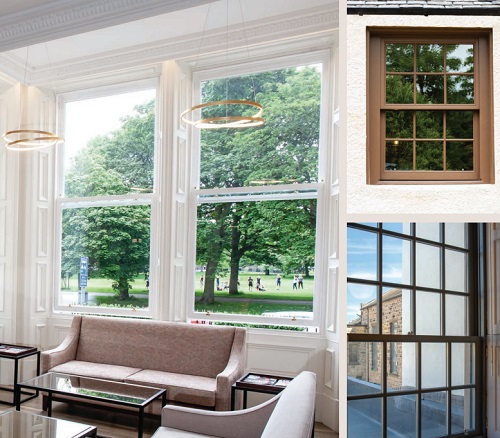
Sash and Case Window Restoration Stirling
Refurbishing timber sliding sash and case window restoration in Scotland is a meticulous process that preserves the architectural heritage of historic tenements and townhouses. The following paragraphs outline the typical stages of this specialized restoration work.
1. Timber Repairs and Structural Integrity
The process begins with a thorough assessment of the timber, as Scottish weather frequently causes localized rot in the lower sashes and window cills. Rather than replacing the entire unit, skilled joiners prioritize “splice repairs,” where decayed sections are cut out and replaced with durable, matching timber like Douglas Fir or Iroko. Specialized resin systems are often used to bond new wood to the original 19th-century timber, creating a seamless, watertight seal. This approach maintains the structural integrity of the frame while preserving as much of the high-quality, slow-grown original wood as possible, satisfying strict conservation standards.+2

2. Mechanical Overhaul: Cords and Weights
A vital part of any refurbishment is the mechanical overhaul, ensuring the sashes slide effortlessly once again. This involves removing the internal baton rods and parting beads to access the weight boxes via “pocket pieces.” Old, frayed cotton cords are replaced with high-quality waxed sash ropes, and the original cast-iron or lead weights are re-balanced to match the weight of the glass precisely. Pulleys are cleaned, lubricated, and sometimes replaced if the wheels have seized. This restorative work eliminates the common “stuck window” problem, allowing the heavy timber sashes to be operated with minimal effort.+1
3. Draught-Proofing and Energy Efficiency
To combat the notorious Scottish wind, modern refurbishment almost always includes the installation of a discreet draught-proofing system. Joiners route thin grooves into the timber beads and meeting rails to house brush or blade seals. Unlike stick-on alternatives, these integrated seals are nearly invisible and do not interfere with the window’s traditional appearance. This upgrade significantly reduces heat loss, eliminates the characteristic “sash rattle,” and improves acoustic insulation against street noise. It is widely considered the most cost-effective way to modernize a traditional window’s thermal performance without the need for intrusive double-glazing or planning permission.
4. Glazing, Putty, and Sand Mastic Seals
The external perimeter of a Scottish sash window requires a traditional seal known as “sand mastic”—a mixture of burnt sand and linseed oil. This material remains flexible, allowing the timber to expand and contract without cracking the seal against the masonry. During refurbishment, failing mastic is raked out and reapplied. Similarly, any cracked glass is replaced with matching historic or “slim-lite” panes, held in place with traditional linseed oil putty. This ensures the window remains weather-tight and aesthetically consistent with the building’s original design, protecting the interior from dampness and water ingress.+1
5. Finishing: Painting and Period Ironmongery
The final stage involves a comprehensive painting cycle and the restoration of period hardware. Sashes are sanded back and treated with a three-part paint system, carefully applied to prevent the moving parts from being “painted shut.” Original brass or iron hardware, such as sash lifts, fasteners, and Simplex hinges—which allow the window to swing inward for easy cleaning—are cleaned of old paint and polished. If original items are missing, high-quality replicas are fitted.
The Sash and Case Window Company, Meadow View, Stirling, FK7 8EX
Tel: 07710 096553, Whatts App: 07584 699607, e.Mail: [email protected]